Unceded Territories by Environmental Humanities Hub

Lawrence Paul Yuxweluptun & Paisley Smith, First Nations

Unceded Territories, 2019

Unceded Territories is a virtual reality experience born out of the collaboration of artist Lawrence Paul Yuxweluptun and filmmaker Paisley Smith, both hailing from Musqueam, Squamish, and Tsleil-Waututh First Nations. The viewer is dropped into an environment steeped in Indigenous aesthetics and music, in which they are encouraged to paint on and design in the world as they see fit. Only in the end are they made aware that their interference has done irreversible damage. This piece serves as an explicit call for environmental justice, specifically in relation to Indigenous rights. Unceded Territories additionally serves as an excellent reminder of the power of creatively expressing environmental justice issues. Yuxweluptun and Smith make adept use of the ability of virtual reality to engage viewers in a way few media can, drawing attention to the intersection of environmental issues and violations of Indigenous rights. Label by Laura Reitze
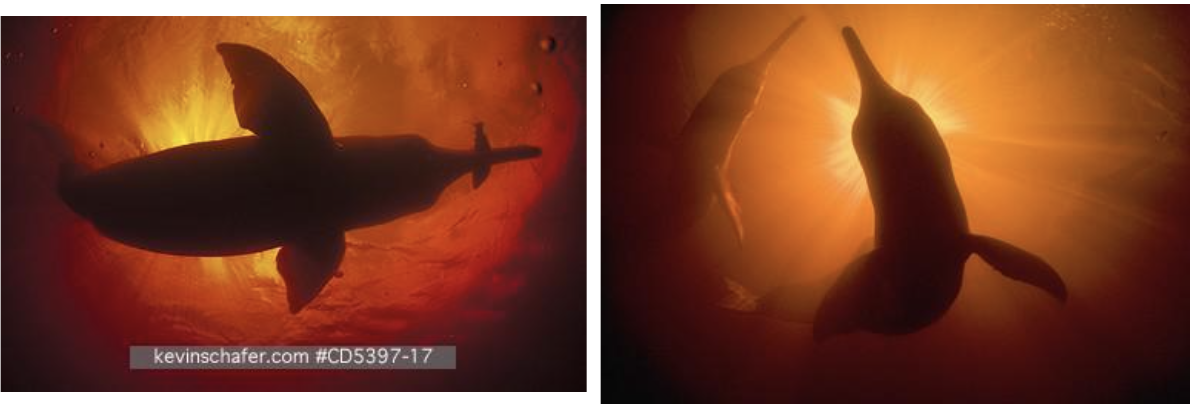
Boto, or Amazon River Dolphin, from underneath, Rio Negro, Brazil, ca. 2009 by Environmental Humanities Hub

Kevin Schafer, American

Boto, or Amazon River Dolphin, from underneath, Rio Negro, Brazil, ca. 2009, 2009

The photograph on the left is a silhouette of a wild Amazon river dolphin, also known as Boto, taken from underneath. Recently listed as “endangered” by the IUCN in 2018, the wild river dolphins of South America were the key species in maintaining biodiversity in the Amazon ecosystem. However, the Amazon dam projects of recent years have put these dolphins and other native aquatic fauna in danger by fragmenting their population anthropogenically. The red-orange tone water was the result of both extreme strong sunlight and low visibility of the water itself. It gives an intense and pressing atmosphere to the photograph itself, creating a message of a hidden danger to the species. Label by Yifei He

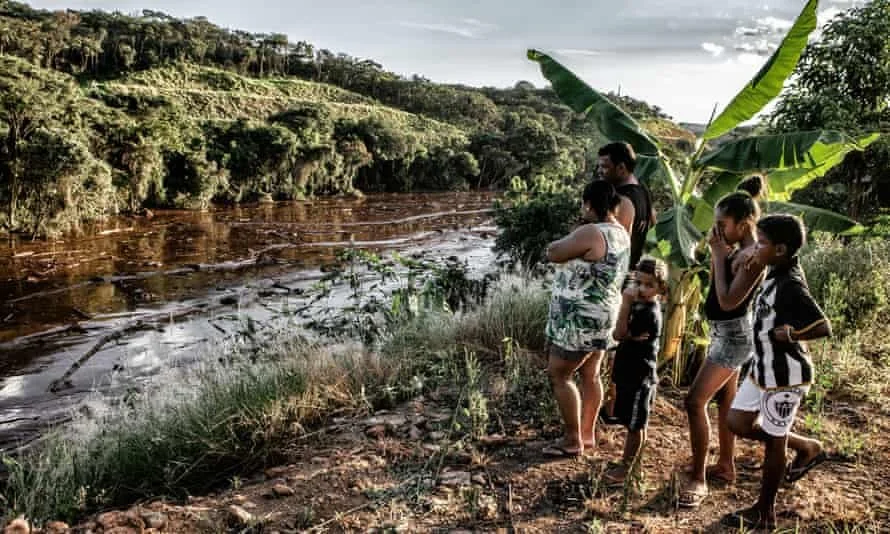
Aline Tiberio, Claudio de Almeida, and their children look at the mining waste covering some of their community (Parque de Cachoeira) by Environmental Humanities Hub

Nicolo Lanfranch

Aline Tiberio, Claudio de Almeida, and their children look at the mining waste covering some of their community (Parque de Cachoeira), 2019

In November of 2015, toxic sludge released from a dam collapse, burying an entire village of Mariana, and affecting the ecosystem surrounding it. It covered houses, cars, streets, and filled the river bed of Rio Doce, the most important in the region. This photograph by Aline Tiberio (a photographer for The Guardian) depicts the emotional impact of this disaster of destruction. The family overlooking an area of their community hits home for the human impact this had and the displacement of adults and children. The eldest child is shown covering her face, either from gasping or covering from the smell of all the toxic waste depicted. This family was illustrated as survivors, meanwhile many other families' bodies remained buried with missing victims being almost impossible to find due to the toxicity posed by the sludge. The Mariana dam was owned by a joint venture between BHP Billiton and the Brazilian mining company Vale. Label by Isabel Schreur

Las Madres by Environmental Humanities Hub

Valarie James, American, born 1953

Las Madres, 2005

As a result of increasingly perilous conditions at the U.S.-Mexico border, undocumented migrants must travel with a host of survival materials, many of which are discarded or lost along the way. Non Immigrant residents of these borderlands, including artist Valarie James from Arivaca, Arizona, often participate in desert cleanups, during which they encounter both decaying objects and, frequently, the bodies of migrants who did not survive their journeys. James collects and repurposes many of these items into artworks which pay homage to the migrant stories interwoven with the objects. The Las Madres sculptures, three female figures made of found pieces of khaki, burlap and denim respectively, are intended to commemorate the immigrant lives lost to the desert as well as the mothers who are left behind. The sculptures will deteriorate over time, just as the bodies of deceased migrants do when exposed to the elements of the borderland desert. Label by Sarah Roberts