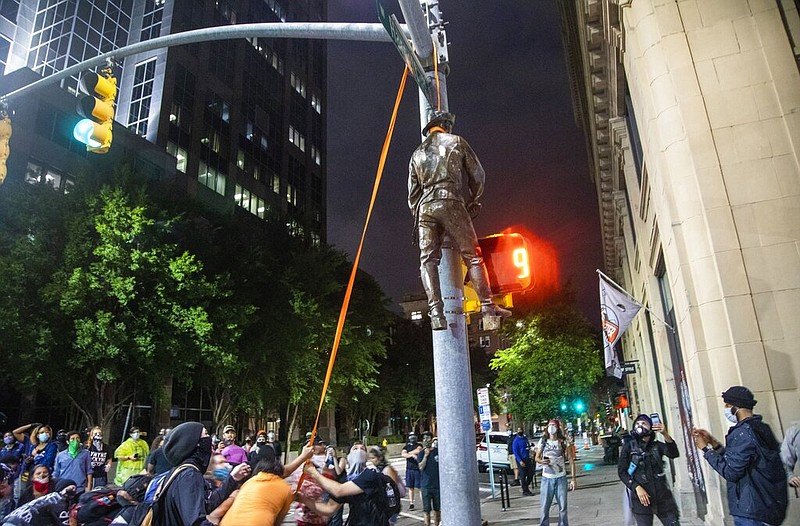
Protestors hang a figure pulled from the Confederate monument at the state Capitol at the Intersection of Salisbury and Hargett Streets in Raleigh, N.C., on June 19, 2020 by Environmental Humanities Hub

Travis Long

Protestors hang a figure pulled from the Confederate monument at the state Capitol at the Intersection of Salisbury and Hargett Streets in Raleigh, N.C., on June 19, 2020, 2020

The global pandemic of COVID-19 aligned with a pandemic that has been plaguing the US since its conception- RACISM. Police brutality towards people of color came to a traumatic turning point when footage of the murder of George Floyd flooded the internet. In the wake of the murder of George Floyd by Minnesota police force protestors, disheartened and hopeless peoples took to the streets to demonstrate their need for change. Travis Long captured protestors who took to removing and re-contextualizing confederate leader statues. In the photograph above protestors hung the confederate statue in the state capital of North Carolina. This symbolic message showed how Americans are ready to rewrite the skewed version of US history that we have been taught for years. The hanging of the confederate statue provokes an uncomfortable feeling but juxtaposes how people of color were hung all over the country by white supremacists. Label by Annabel Bentley

She the People by Environmental Humanities Hub

Bee Harris

She the People, 2020

Brittany (Bee) Harris produces art that consists of abstract shapes and vivid colors that exhibits her social justice activism. Harris’s print, She the People, displays a black fist with orange nail polish closely resembling what is known as the Black Power fist logo. The Black Power fist is associated with the Black Power Movement and can be used to represent solidarity, allyship, and unity. The fist is arranged palm side out, demonstrating strength and memory rather than violence, which a knuckles forward fist could resemble. Above the fist are the words, “SHE THE PEOPLE,” surrounded by bold square and rectangle blocks. Harris’s inclusion of “SHE THE PEOPLE’ embodies and elevates the leadership of women in color during this progressive cultural and political time. Label by Elsa Rall

Black Death by Environmental Humanities Hub

Kimberly Marie Ashby, American

Black Death, 2020

Kimberly Marie Ashby is a Philadelphian artist, activist, and doctoral candidate. In her multimedia artworks, she makes visible social justice issues in order to benefit the mental health of marginalized communities. Her collage Black Death addresses various pressing issues from 2020 – police brutality, racial inequity, mental health, and Covid-19. In this piece, a black woman is shown in grief, with her face held in two pairs of hands. This distressed woman is superimposed on a rugged graveyard, which is actually from a Brazilian cemetery struggling to keep up with the coronavirus death toll. By combining these two emotionally heavy images, Ashby demonstrates the overwhelming effects of both coronavirus and policy brutality on the physical well-being and mental health of the BIPOC communities. Label by Tori Erisman

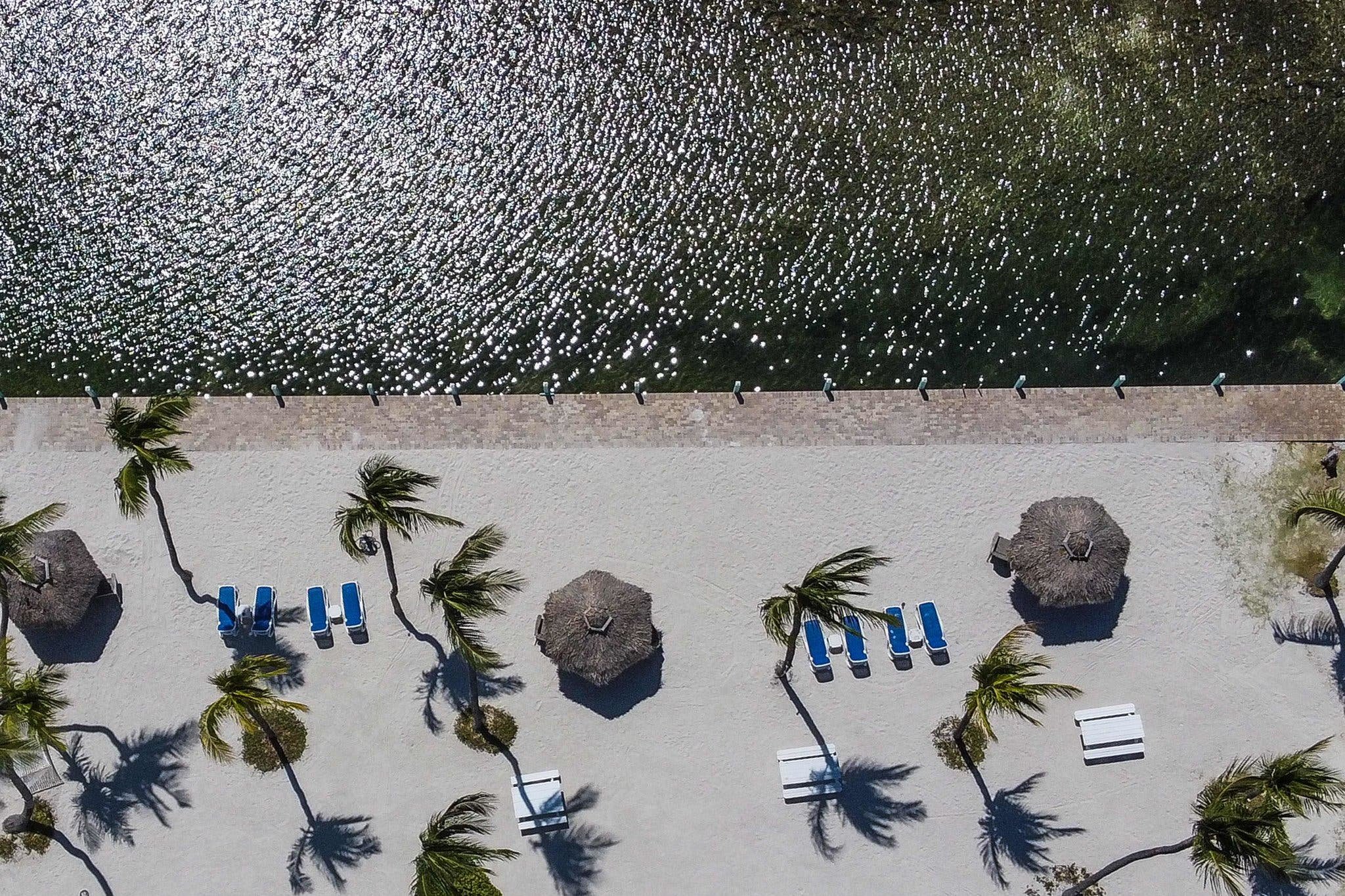
Windley Key, Florida by Environmental Humanities Hub

Chandan Khanna, Indian, born 1980

Windley Key, Florida, 2020

This image was included in the article “Why We Can't Ignore the Link Between COVID-19, Climate Change and Inequity” in a collection of photos titled “America at a Standstill”. Though it might seem like an odd choice to select this image when asked to pick an artwork, I think this photograph does an excellent job of encapsulating all of what’s at stake in this week’s readings. The link between COVID-19 and climate change is a theme that figured prominently in many of this week’s texts. Though the water in this image might appear placid and serene, there is the tacit acknowledgment, provided by the beach chairs and tables juxtaposed against it, that the scene is one wrought with a degree of inherent precarity. Label by Jay Jolles