Woven Chronicle by Environmental Humanities Hub

Reena Saini Kallat, Indian

Woven Chronicle, 2018

In Reena Saini Kallat’s Woven Chronicle, she illustrates a future marked by massive- scale migrations, driven by the rendering of land, inhabited for the majority of human history, uninhabitable. Using string and circuit boards, Kallat crafts an interconnected world map that dynamically communicates the global transformations. Her artwork serves as a plea for global communication and collaboration to confront the imminent tragedy that threatens to reshape our world beyond recognition. The artist adeptly addresses the diverse sources of migration, encompassing floods, droughts, and wars, highlighting the unifying theme of mass migration. Label by Jackson Smith
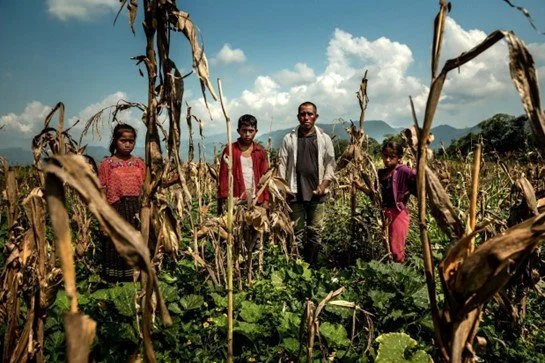
Carlos Tiul, an Indigenous farmer whose maize crop has failed, with his children by Environmental Humanities Hub

Meredith Kohut, American

Carlos Tiul, an Indigenous farmer whose maize crop has failed, with his children, 2019

This striking photo shows a farmer in the Alta Verapaz region of Guatemala standing in his field of dead corn with his family following intense droughts in the region. The changing conditions are forcing him and many others to leave their homes and seek other options. But as the photo conveys, this is their livelihood and home and the last thing they want to do is leave. In coming decades, conditions could worsen to the point that 19% of the earth is an unlivable hot zone, and this photo begs the question: where will all those people go and what will they do? Label by Jackson Schiminger

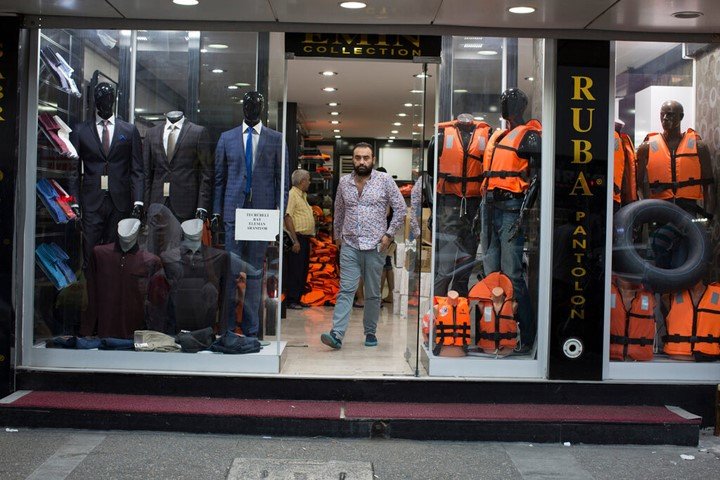
A men's clothing shop in Izmir, Turkey by Environmental Humanities Hub

Tyler Hicks, Brazilian-American

A men’s clothing shop in Izmir, Turkey, 2015

In Izmir, Turkey, in 2015, a menswear shop started to sell life jackets in preparation for 500,000 migrants to Europe. Izmir is a frequented spot for refugees and is populated with local businesses. On the right is stereotypical male clothing– suits with white button downs and ties. But the left presents mannequins in life jackets, as if they were presenting a new line of fashion rather than a life saving service. The integration of looming disaster and environmental hazards into the normalcy of everyday life is a terrifying reality. The prominent life jacket display portrays safety as more of a luxury and privilege rather than a basic human right. Label by Grace Cohen

Space in Between by Environmental Humanities Hub

Margarita Cabrera, Mexican

Space in Between, 2018

Margarita Cabrera’s Space in Between exemplifies the difficulties of strict border policies, demonstrating the linked cultures, economies, and people between the Mexican-Texas border. Linked within the work are political, social, and cultural issues as the cacti are sewn from U.S. Border Patrol uniforms' sections and patched in with flags or words of affirmation. The plants themselves represent aloe vera, with their various healing properties, and cacti, with their dangerous and painful likenesses. As governments continue to divide families and put up walls to keep immigrants out, Cabrera’s work symbolizes how these borders also keep people in, harming those on both sides of the wall. Label by Clarissa Cantacuzène