Forage from Fire #21 by Environmental Humanities Hub

Norma I. Quintana, Puerto Rican-American

Forage from Fire #21, 2017

This is an image taken from Quintana’s exhibition Facing Fire: Art, Wildfire, and the End of Nature in the New West. It shows a charred heart-shaped shell that was found in the wreckage of her home and studio days after the Atlas fire roared through her neighborhood. Quintana places a number of ordinary household items (such as pendants, ornaments, kitchen utensils, and frames) onto the plastic fire clean-up glove to convey the “persistence of memory” and personal resilience after such a devastating and destructive event. In her simple-yet-stunning photograph, Quintana is able to put trauma and loss into literal perspective, juxtaposing damaged remnants of her belongings with the restorative hand of human agency. Label by Tara Vasanth

The Forest Brigade by Environmental Humanities Hub

Thiago Mundano, Brazilian, born 1986

The Forest Brigade, 2021

Thiago Mundano is an art activist born in São Paulo, Brazil, and is recognized internationally for his “papo reto” graffiti, or “straight to the point” pieces. In October 2021, the graffiti artist finished his vast mural (measuring about 10,000 square feet) titled The Forest Brigade. The mural was created entirely out of ash from the burned Amazon rainforest. While traveling to collect the ash, Mundano also met with firefighters and fire volunteers to hear their stories. Mundano’s mural depicts a firefighter at its center, placing the voices and stories of those who risk their lives to fight fire at the very forefront. The burning forest in the background and depictions of continuous deforestation raises the issue of wildfires across Brazil as well as how other forms of environmental degradation can lead to this worldwide destruction. Additionally, the skeleton of an animal and the discarded megaphone recall the many lives and voices we have lost to the fire. Mundano hopes his larger-than-life mural can aid the effort in protecting both environmental and universal human rights. Label by Isabel Williams

California on Fire by Environmental Humanities Hub

Jeff Frost, American

California on Fire, 2018

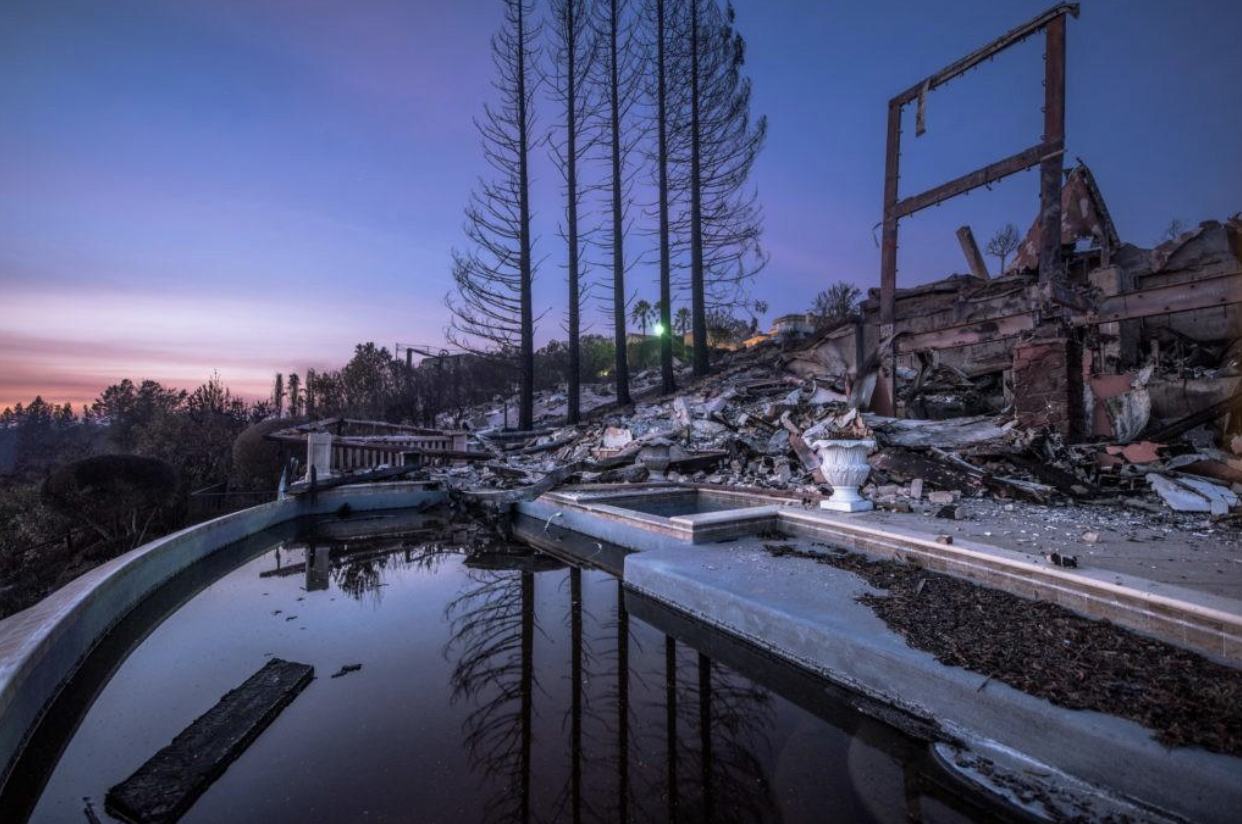
The image above depicts a photograph by Jeff Frost of the skeleton of a home leftover after being ravaged by a wildfire in California. Jeff Frost has spent years documenting and filming wildfires in California. His experience in viewing the effects of wildfires and their increased intensity over time is reflected in the artwork he has produced from his film. The photograph depicts a place where there was once a home and life thrived, but now all that remains is the charred skeleton and ashes of that lively past. This image reveals the nature of fire as a deadly force. Label by Jonathan Yoder

Flint is Family Series by Environmental Humanities Hub

LaToya Ruby Frazier, American, born 1982

Flint is Family, 2016

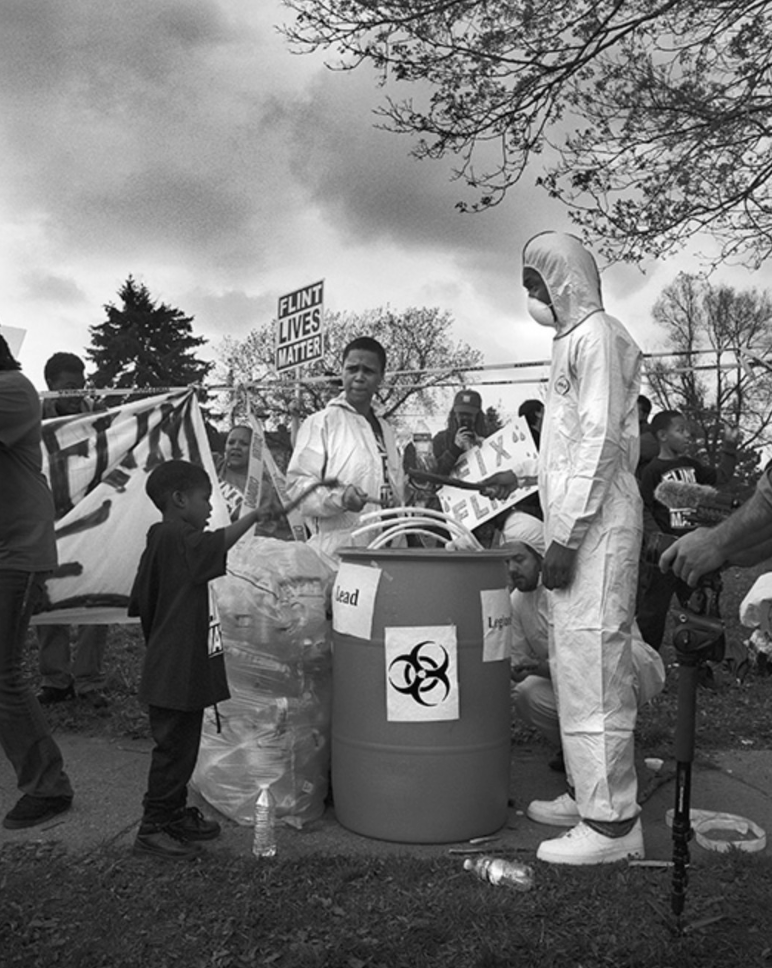
The Flint water crisis is another example of the violence people of color and people of poverty experience worldwide. Astoundingly this violence is seen all over America. A country of wealth and power and an extensive government with agencies to protect the people against problems like these. However, the people of Flint, Michigan, were exempt from the protection of the government. The greedy officials neglected children, such as the one in this photograph, from their right to drink water, bathe, and brush their teeth. They were plagued by a toxic water supply sparked from a switch the state used to save money. The residents of all ages quickly fell ill to the toxicity. The background of the photograph shows a protestor holding up a “Flint Lives Matter” sign. This symbol further connects the water tragedy in Flint to the Black Lives Matter movement across the US today. The slow violence and systematic racism in our country prove the ideals that America boasts are only there to protect a select group, which is wealthy white Americans. Label by Annabel Bentley

The photograph from the series Flint is Family (2016) by LaToya Ruby Frazier effectively puts a face on how environmental factors like lead affect individuals. It presents an innocent young boy alongside a man in a hazmat suit, both seeking protection from danger, but with vastly different levels of exposure. This striking juxtaposition helps the audience comprehend the magnitude of the issue and those most affected by it. Such a form of protest proves highly effective in raising awareness and visibility for those who have been marginalized for generations. Label by Jackson Smith