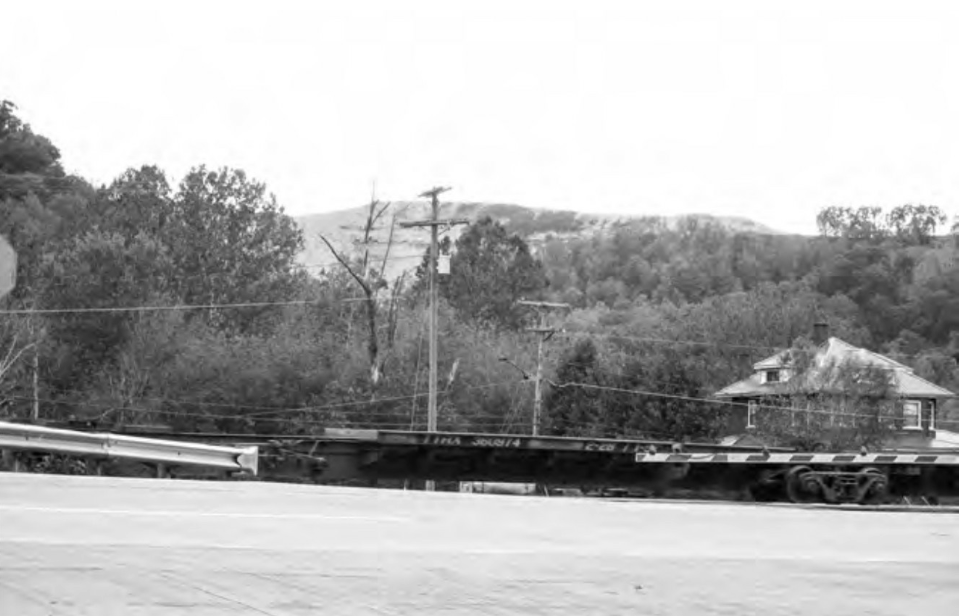
Figure 9.30 (Eve’s Photo of an Empty Coal Train) by Environmental Humanities Hub

Eve, American

Figure 9.30 (Eve’s Photo of an Empty Coal Train)

This photo ties together MTR’s impact on the economy, nature, and the day-to-day lives of local people. The photo shows a coal train going past with no coal on it while in the distance is a bare mountain that has been subjected to MTR. To the right side is a home, localizing the scene. The empty train gives a sense of the economic devastation of the region as people have lost jobs and have been forced to leave the region as MTR has become the dominant form of coal mining. While not shown, the coal extracted from MTR is now transported by trucks on local roads, a dangerous practice that has caused many accidents, something deeply felt in this local context. Presented by a local woman at a community meeting, this photo asks other local women to critically consider the tolls of MTR on their safety, their community, and the natural world. Label by Caitlin Blomo

Only God Should Move Mountains. Stop Mountaintop Removal Mining of the Appalachians by Environmental Humanities Hub

LEAF (Lindquist Environmental Appalachian Fellowship), American

Natural Resources Defense Council, American

Only God Should Move Mountains. Stop Mountaintop Removal Mining of the Appalachians, 2009

LEAF, a small Tennessee-based environmental coalition used this advertisement to promote their work of mobilizing Christians against mountaintop removal mining in Appalachia. The text of their message is clear and accompanies a prominent image on the left side of the billboard of an autumn dusk in the mountains. The otherwise idyllic image is interrupted by a gulf in the center of the image where blasted rock and roads have destroyed and displaced the mountains. Though this image does not treat the more dire human costs of mountaintop removal, it is notable that no human beings are present in the image. This billboard serves as a direct counter to coal-industry messaging (also commonly using billboards) that coal extraction provides jobs. Mountaintop removal provides polluting fossil fuel not without first destroying mountains and creating toxic byproducts that pollute community water supplies and for whose benefit? Label by Morgan Brittain

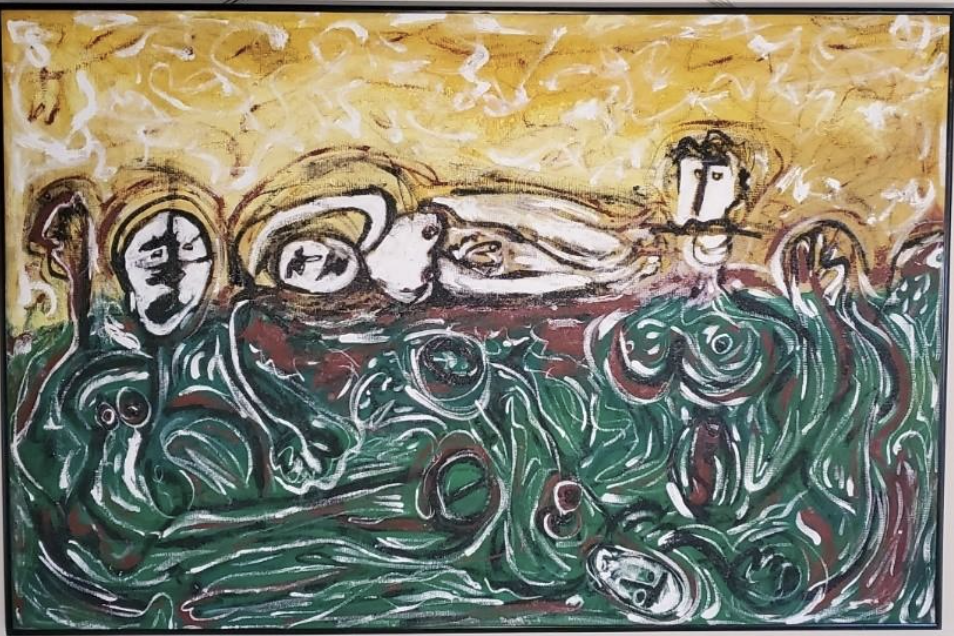
The Red Tulips by Environmental Humanities Hub

Dustin Hall, American, born 1999

The Red Tulips, 2018

In this painting, Hall uses abstraction and color blocking to create an anthropomorphized landscape of queer figures. Painted on the back of a scavenged cardboard poster frame and hung with scrap wire, the painting contains two separate blocks of color, the upper block in yellow and the lower block in green. Within in each block, spirals of other colors swirl to create forms suggestive of penises, vaginas, breasts, and faces. Uniting and blurring the boundaries between the two blocks are three distinct, humanlike figures in white, black, and gray. The bodies which appear in the middle, with their combination of female and male primary and secondary sex characteristics, do not fit cisnormative understandings of biological femininity and masculinity. Just as the figures blur between the landscape and each other, so too do they blur between binary constructions of sex and gender. The abstraction of the lines in the lower half of the painting further enables this sexual and gender ambiguity. Phallic forms whirl into yonic forms which then whirl into breasts and faces and hands until each form is simultaneously recognizable and unrecognizable, disrupting biological binaries of sex and gender (as well as binaries separating humans and nature) to the point where such binaries become incomprehensible. The figure in the center of the painting grounds this chaos, signaling that an alternative to shaky models of binary gender resides in the transcendence of this binary in favor of a body that recognizes the fluidity of gender and sexual categories. Label by Maxwell Cloe

Hawk’s Nest Tunnel Under Construction by Environmental Humanities Hub

Unknown

Hawk’s Nest Tunnel Under Construction, 1930

Drilling through solid sandstone, the construction of the Hawks Nest Tunnel in West Virginia became the site of the worst industrial tragedies in United States history. Nearly 3000 men, including 2000 African American migrants from the South, labored at break-neck speed with no safety precautions to carve out the tunnel for Union Carbide’s electro-metallurgical power plant. Their work is seen in this stark black and white photograph showing the jagged, hard rock that was chipped away to create the cavernous route. The by-product of that labor also produced insidious silica dust. As hundreds of these young men were exposed to essentially breathing in glass, their lungs quickly hardened, and they died from acute silicosis. The calamity of Hawks Nest Tunnel received nationwide attention, with hundreds of lawsuits filed, congressional hearings and policy change enacted, and an artistic lamentation enacted through folk music and poetry. Label by Kelly Conway