Kitchen Window Looking North by Environmental Humanities Hub

Betsy Jaeger, American, born 1954

Kitchen Window Looking North, 2010

Artist Betsy Jaeger is a native of Morgantown, West Virginia, where she collaborates with her local arts community center to document the changes perpetuated by the fossil fuel industry in her exhibition “Inside Looking Out.” Jaeger has watched her hometown be used as a testing ground for strip mining, extracted to ruin after the mining company eventually declared bankruptcy. In its entirety, the exhibition uses windows as metaphors for keeping us safe and allowing us to look outside of ourselves. This particular image is of the inside and outside of Jaeger’s kitchen windows. On the left, the interior space of the room floats amidst her front yard, while the exterior vision on the right underscores the reality: the house sparrow attacking a bluebird nest against a background of the “invasive species” of the strip mine. Label by Kristin Rheins

Bushy Fork Coal Sludge Impoundment by Environmental Humanities Hub

Vivian Stockman, American, born 1962

Bushy Fork Coal Sludge Impoundment, 2009

Vivian Stockman’s photographs of various mountaintop removal mining sites and coal sludge impoundments in West Virginia are part of her activism against the environmental injustices committed by the coal industry in Appalachia. Her photos of the Bushy Fork Coal Impoundment illustrate the strange geometry and colors of a landscape scarred by industry. The unnatural blue color of the lagoon is the result of the various chemicals used in coal refinement, which are subsequently stored at sites like Bushy Fork or are injected into abandoned underground mines, where it risks contaminating groundwater. Construction on this impoundment began in 1995 and its owner, Massey Energy, has been expanding the dam ever since, despite local opposition. Label by Sarah Roberts

Sludge Creek by Environmental Humanities Hub

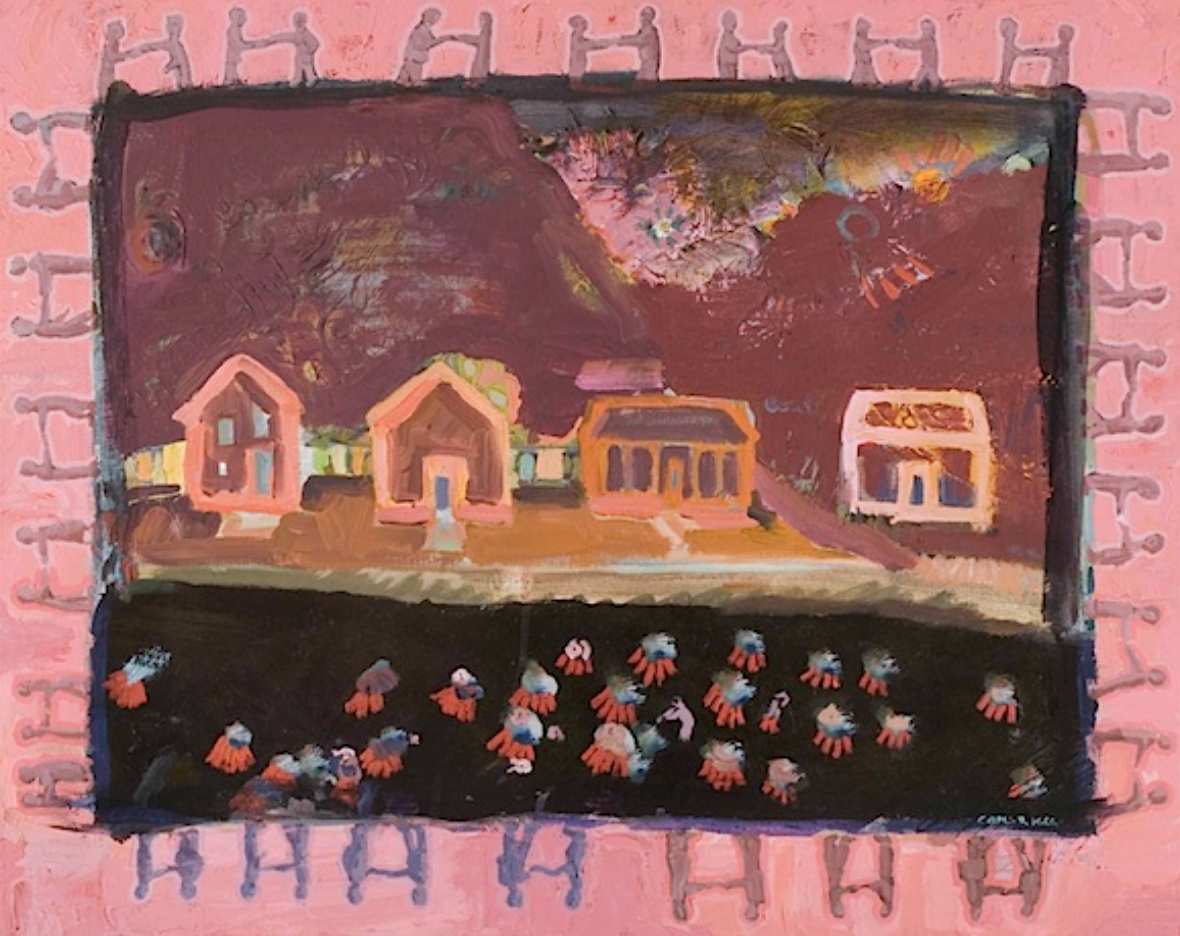
Cynthia Ryan Kelly, American

Sludge Creek, 2006

Cynthia Ryan Kelly is an artist whose works are narrative, colorful, and spontaneous works that aim to weave social commentary into her compositions. This piece comes from Kelly’s “Stories about Mountain Top Removal” series. Kelly attaches a quick statement to the piece; “Seemingly neutral people shake hands, make deals and destroy creation.” Through the saturated colors and contrasting black coal sludge, a sense of toxicity and almost grotesque mood is given.  Kelly uses this piece to comment on the impacts of mountaintop removal coal mining on communities surrounding those areas. Human figures are shown drudging through what is coal waste, while a mountain above their homes seems to be blown up, illustrating how the process of extracting coal to fulfill capitalist demands destroys the lives of those who live in the ecosystem with the coal. Label by Isabel Schreur

Buffalo Creek Memorial by Environmental Humanities Hub

Kevin Ledo, Canadian, born 1978

Buffalo Creek Memorial, 2014

Kevin Ledo’s mural acts as a memorial to honor the lives and properties lost in the 1972 Buffalo Creek disaster. The flood, as depicted in the left side of the mural, destroyed many houses and properties and was a result of slurry formed by the waste and chemicals of the coal mining industry. The dark colors portray the filth of the contaminated water that flowed through the community, countering the idea presented by the coal industry that coal is a clean energy source. Ledo also depicted most of the sky as being dark, hinting at the air pollution generated by both mountaintop removal practices and the burning of coal. The woman in the foreground holding onto a child portrays how the coal industry, and ongoing disasters created by them, are negatively impacting generations of people in the Appalachian communities. Finally, the white dove in the top left corner is a symbol of peace, which I interpret as the painter’s call for justice towards the people who are suffering at the hands of the coal industry. Label by Lindsey Smith